
Do we need more magic?
The invisible side of art.

Moodboard
Lately, I’ve been devoting increasing attention to the night. To that muffled envelope that wraps around us and calms everything, yet leaves a single unstoppable activity alight: that of our brain.
It is there that dreams take shape. Internal visions, images that flow before closed eyes and that, upon waking, continue to vibrate. During the day I analyze them, deconstruct them and often entrust them to a journal, a true dream journal.
I notice that certain settings, certain “sets” even the furnishings that inhabit them, the objects my mind selects, the characters, become precious materials: ideas for installations, atmospheres, exhibition concepts yet to be explored.
This digression on dreams is not merely a page from a personal diary. It’s part of a broader discourse that concerns all of us as we approach the end of this 2025, a complex year, in art as elsewhere.
A year that seems to suggest, like a submerged voice, that we refine our gaze toward what happens around us but remains intangible, not immediately nameable.
Sigmund Freud was the first to symbolically open the doors of the unconscious. His theories offered artists a new language to give form to what escaped rationality: repressed desires, removed memories, unprocessed traumas. Dreams thus become symbolic messages, coming from parts of ourselves that struggle to emerge into the light of day.
From here the passage to Surrealism appears almost inevitable. Born in the 1920s, when reality was beginning to show itself as insufficient and cruel, Surrealism turned to dreams, the absurd, the occult, as instruments of knowledge. Breton, Ernst, Magritte, but also many figures who remained long at the margins, constructed a visual vocabulary for interior states until then lacking representation.
Surrealist art is often of a disturbing beauty: elegant, seductive, technically refined. And it is precisely this ambiguity that makes it so powerful. The form attracts us, reassures us and only afterward do we realize we’ve been led before something disturbing.
It’s the same mechanism as trauma: the deepest memories nest in apparently innocent details, a light, a decorative motif, a familiar scent. Beauty and horror become inseparable.
Perhaps this is also why, more than a century later, these images continue to resonate with force.
And observing Milan’s exhibition calendar, I found myself wondering: do we need more magic today? New interior worlds to survive this present?
A possible answer comes from Fata Morgana: Memories from the Invisible, a project by the Fondazione Nicola Trussardi at Palazzo Morando. More than an exhibition, it’s a sensitive device that brings works and spaces, visible and invisible, history and vision into dialogue.
The palazzo, once the residence of Countess Lydia Caprara Morando, a collector of esoteric, theosophical, and spiritualist texts, becomes the ideal place to interrogate what has long been considered marginal or forbidden: the occult, the mediumistic, non-rational knowledge.
At the center of the journey, the works of Hilma af Klint, pioneer of a spiritual abstraction born from visionary experiences and mediumistic practices, dialogue with a constellation of artists who, from Surrealism to today, have explored dream, trance, ritual, body and dissociation.
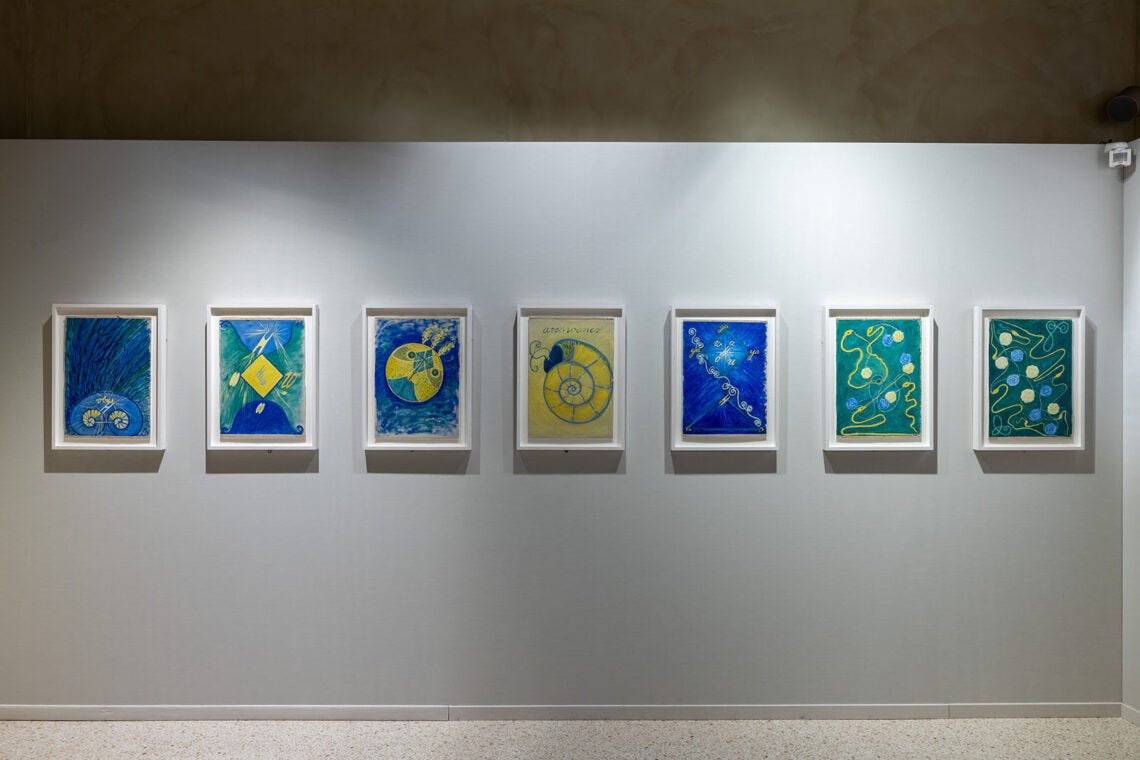
From Maya Deren to Carol Rama, from Chiara Fumai to more recent research, a clear red thread emerges: art as an instrument to give form to what is not seen, but acts.
Moving just a few steps away, to Palazzo Reale, this same thread stretches and strengthens.
The exhibition Man Ray. Forms of Light presents photography as an alchemical practice: not simple recording of reality, but metamorphosis, transfiguration. Bodies, faces, objects become thresholds, unstable surfaces crossed by desire and the unconscious.
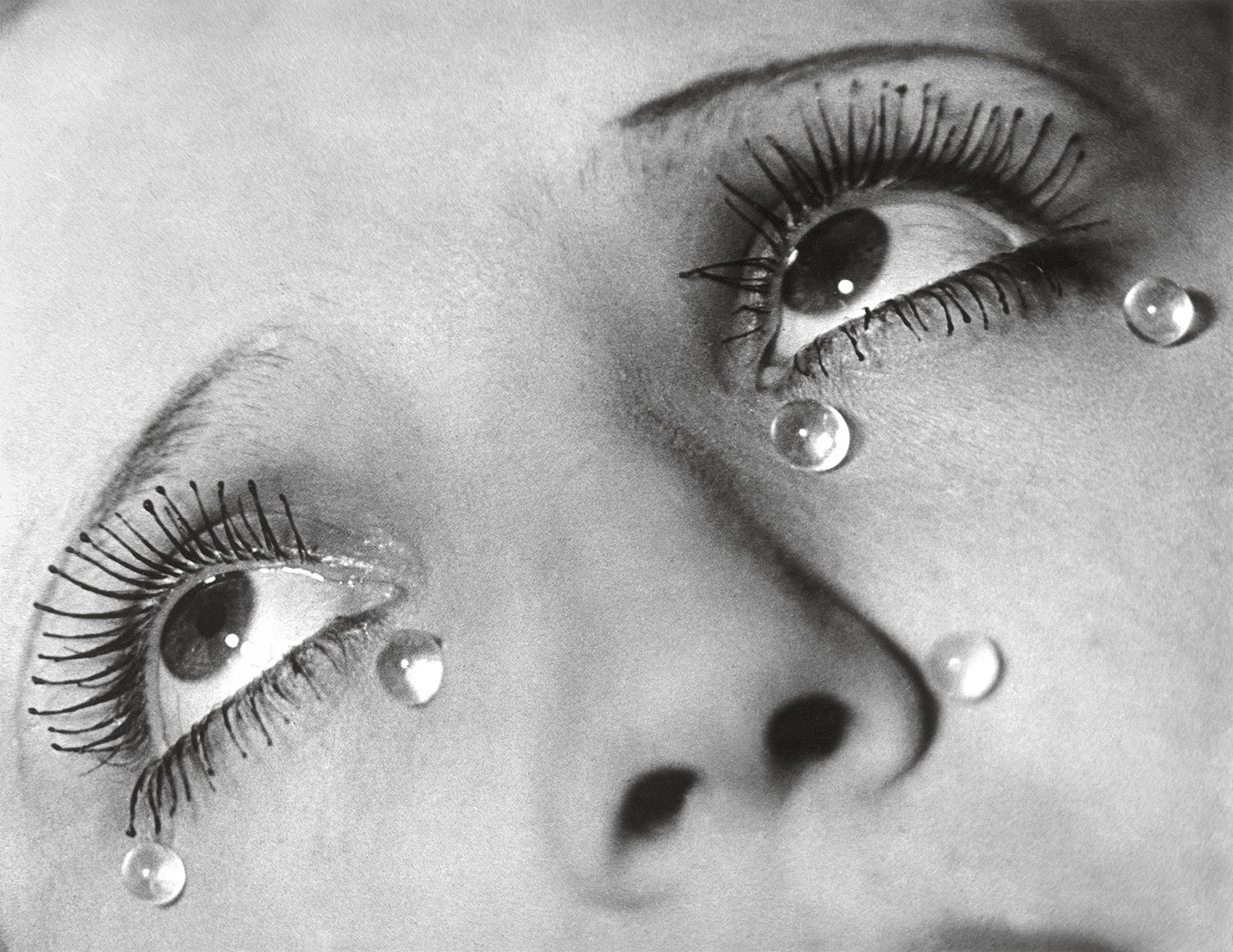
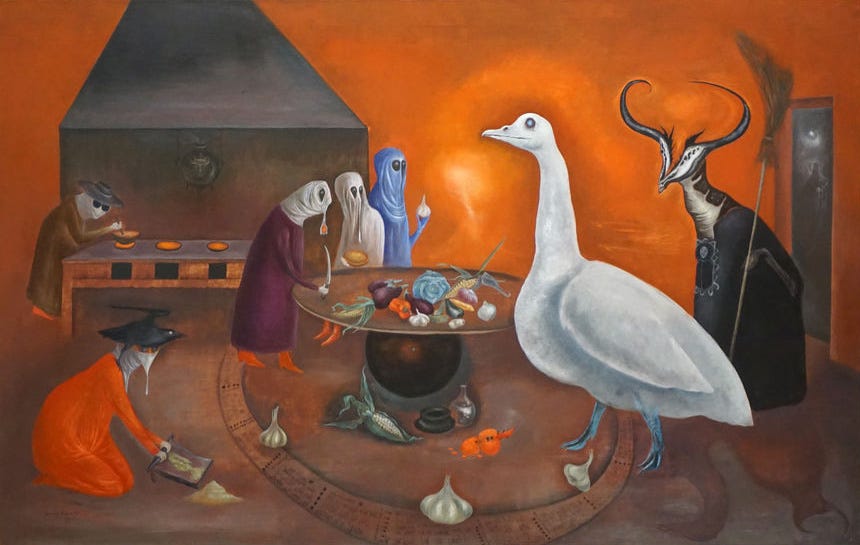
Alongside Man Ray, the universe of Leonora Carrington opens as an autonomous and subversive world, in which art, mythology, feminism and spirituality interweave. Carrington doesn’t represent the dream: she inhabits it.
Her works are maps of an undisciplined consciousness, capable of creating alternative worlds as a political and vital gesture.
Three different exhibitions, three places, a single city (with deep esoteric undertones itself) and an urgency that emerges with clarity: the necessity to return to listening to what is not immediately visible.
Dream, the surreal, the occult not as escape from reality, but as instruments to traverse it. As languages capable of returning to us complexity, depth, imagination. Perhaps today, more than ever, we need to give space to these dimensions. To keep a collective dream journal and too accept that not everything must be explained, measured, illuminated.
Perhaps this season, historical, emotional, creative, asks precisely this of us: to listen to what moves beneath the surface, to grant space to dream, to intuition, to lateral thinking.
If you are artists, researchers, curators, writers, or simply explorers of the invisible; if your work dialogues with the esoteric world, with the symbolic, with the surreal, with ritual practices or with forms of unconventional knowledge, I would like to meet you.
I deeply believe in the necessity of creating sensitive networks, living archives, places of exchange among those who feel that art can still be an instrument of revelation and transformation.
Greta Zuccali
To learn more about my work, discuss collaborations, share event news, or suggest exhibitions for review, write to me at hello@hub-art.org.
Events of the month
Barcelona
The call to participate in the upcoming exhibition, Human Cosmos, scheduled from February 6 to 16 in Barcelona, is now open.
The show explores the idea of the mask, the identities we choose, and those we’re forced to wear, as we move through society.
We all carry one… or many.
Here is the link to submit your work.
Milan
The exhibition The shape of things: three visions of contemporary Japan has opened. Among the participating artists, Ohsumi Hideo 大隅秀雄 presents a series of kinetic artworks conceived so that the wind itself becomes a co-author of the piece.
Corals Gallery: Via Evangelista Torricelli 21, Milan
Until 30 December, Monday - Friday: 15:00-19:00


Have an art project you’d like to bring to Barcelona?
Get in touch at info@hub-art.org