
Art fair format changes behavior
A conversation with Jyeongyeon Kim, director of HIVE Art Fair

Market watch
For reading between the lines of what is happening in the art market
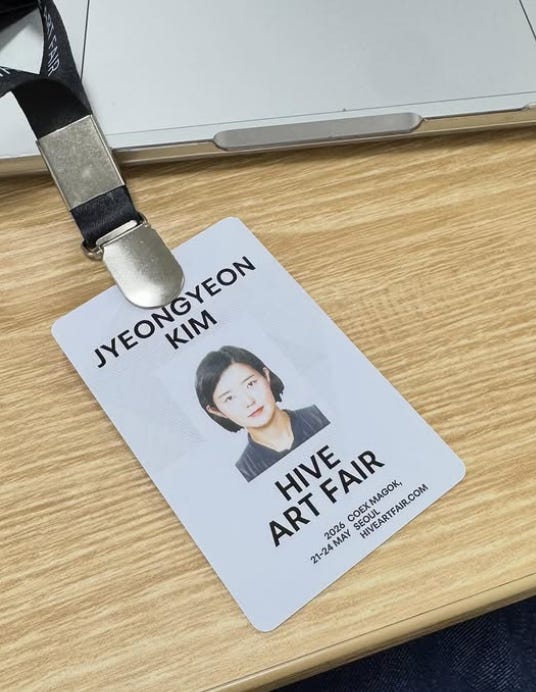
Can eliminating booth fees genuinely change the art fair system? I put the question to Jyeongyeon Kim, director of HIVE Art Fair in Seoul.
But let’s take a step back!
Anyone who read my April 19 newsletter already knows what I mean when I say “fairification”: the constant multiplication of art fairs, unsustainable costs for galleries, a format that has stopped surprising anyone.

HIVE made its debut on May 21 in Seoul, attempting to respond to all of this with around 50 selected galleries, a hexagonal architecture designed to slow visitors’ footsteps, and an economic model that inverts the relationship between organizers and galleries. Here is what she told me.
When asked whether the model she had envisioned translated into reality, the answer was unequivocal.
“The physical model we had planned was realized in practice almost exactly as we had imagined it. After seeing it on-site, we became even more convinced that this approach is one of the most reasonable ways to improve the existing art fair structure.”
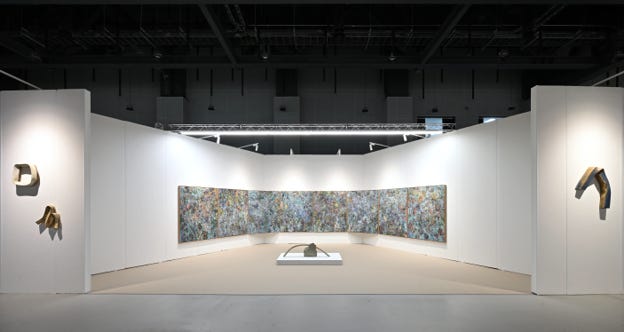
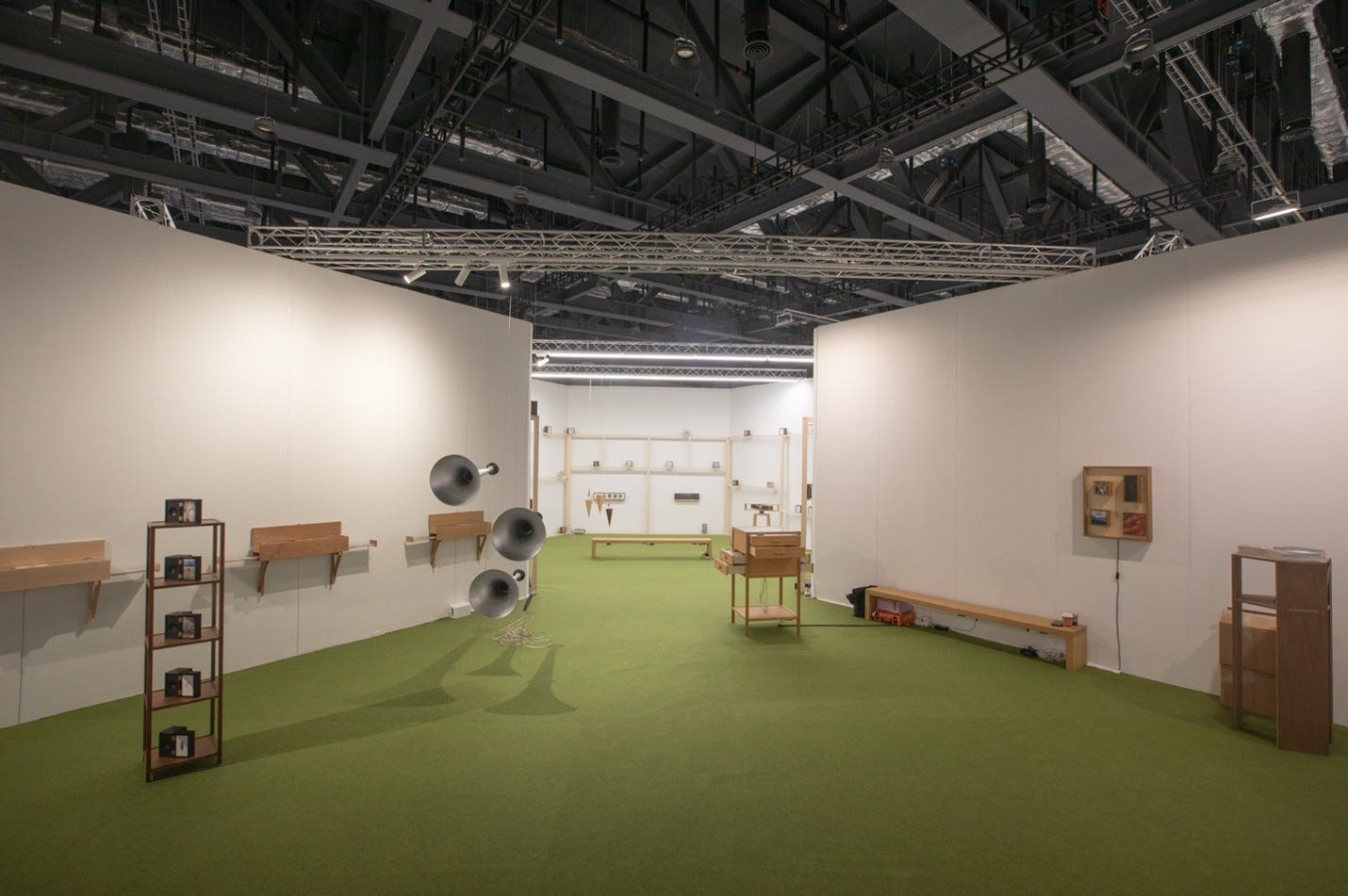
The architectural element was central. The hexagonal booths, opening at 120 degrees, created a wide and uninterrupted sightline across the entire fair.
“Many galleries told us that this structure worked better than the conventional rectangular booth. They said it helped them show their identity and their artists’ work more clearly.”
The layout was not an aesthetic detail but a curatorial device. The galleries with the most compelling presentations chose to show depth rather than simply display many works.
Around 40% of the 48 participating galleries presented booths with three artists or fewer. Among the examples highlighted: A-Lounge, a young Korean gallery, used the spatial angle to present a two-artist show, drawing strong responses on-site; Lee & Bae transformed their booth into a dedicated exhibition room for media artist Hyeryun Jung, attracting the attention of museum professionals; Tomio Koyama Gallery from Japan recorded the highest sales of the entire fair, selling every work on show in Nana Funo’s first solo presentation in Korea.
“These cases are important evidence. Clear curation, a no-booth-fee structure, and sales did not work against each other. On the contrary, they worked together within a single structure.”
The decision to eliminate booth fees was one of the most radical aspects of the project. But did it genuinely reduce the economic pressure on galleries?
“The economic pressure did decrease. More precisely, it did not simply disappear: it transformed into a different kind of pressure, a question of curation. That was what we intended from the beginning.”
The case of the Japanese galleries illustrates the shift well.
“At many international fairs, it has been difficult for galleries to present young artists, because booth fees were often too high. For emerging artists in particular, whose works are not priced very high, it was hard to recover the cost of a standard booth fee. With their removal, the situation changed. At our fair, galleries had a real opportunity to present emerging international artists.”
In some cases, galleries spent more on additional booth elements and promotional programs - such as artist talks - than they would have spent on the booth fee. And yet, the director tells me, these same galleries did not feel that money was wasted.
“The costs went beyond a simple rental fee for a space. They were interpreted more as an investment in their own exhibition. This difference matters.”
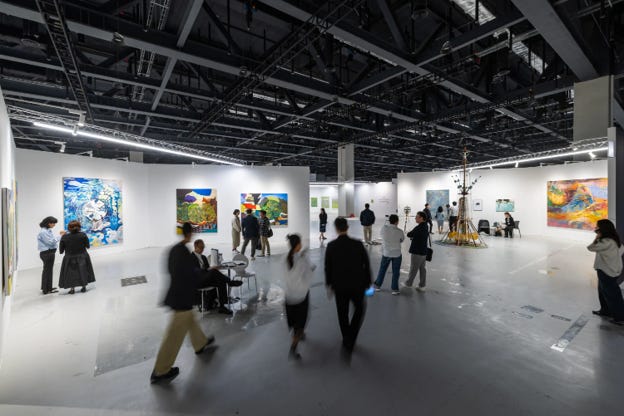
The effect of the hexagonal structure extended beyond how works were presented - it also shaped how visitors moved and paused. In a conventional fair, booths are lined up along straight corridors: visitors walk straight ahead and turn their heads from side to side. At HIVE, the hexagonal layout created a circular flow, their steps became slower, and they were able to look at the works more carefully.
The visual effect was equally different. Because the booth walls were set at varying angles, visitors did not simply see the back wall of a single stand, but perceived the walls of multiple booths layering over one another, creating a depth that is difficult to achieve with traditional rectangular structures.
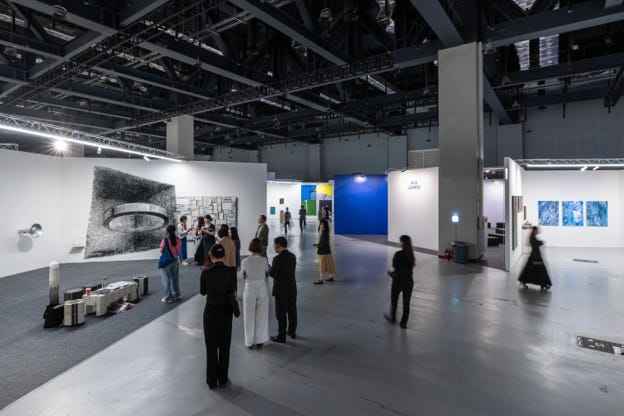
At the center of the fair, The Core - the curatorial space run by the HIVE team - played a dual role. On a relational level:
“By curating our own exhibition at the center of the venue, HIVE Art Fair showed that our team was not only a team of operators; we effectively demonstrated that we also had curatorial ability.”
On an experiential level, visitors could encounter exhibitions of near-museum quality within a fair context, and artists could meet the public directly, a kind of contact that is not always guaranteed in an institutional setting.
One of the most interesting aspects to emerge from this edition was the transformation of competitive dynamics among galleries. In a traditional fair, the pressure of booth fees often translates into sales pressure and isolation.
At HIVE, the conditions were different. During the installation period, once galleries finished setting up their own booth, they began walking around the fair.
“The atmosphere on-site changed. It was not a closed atmosphere, where each gallery focused only on its own sales target. Real exchange happened. Galleries looked at each other’s presentations, took notes, studied other booths.”
Concrete outcomes confirm the shift: one Korean gallery confirmed plans to organize two exhibitions for artists introduced to them by international galleries during the fair; Phil Grauer of CANADA Gallery (New York) stated that meeting the Korean art community was as meaningful as the sales results.
“Competition did not disappear - but the direction of competition changed. Galleries were still very aware of each other, but the standard was not price or sales volume: it was curation and identity. This was the shift we wanted to create.”
HIVE was born in Seoul, but the question it asks is not a local one: “Why does an art fair always have to work in the same way?”
The problems it set out to address, ever-rising booth fees, repetitive formats, a growing distance between fairs and artistic context, do not belong to a single market: “They are problems shared across the world. We simply acted a little earlier and a little more directly.”
The lesson the director draws from this first edition is both practical and conceptual.
“Format changes behavior. When the space changes, so does the way people move within it - and so does the way they perceive the value of what is on show.”
Galleries arrived with a familiar model in mind. But once inside HIVE, they experienced the concrete possibility of something different.
“They left imagining the next version of themselves. This is not simply adaptation. It is a shift in the standard.”
The second edition of HIVE Art Fair is already confirmed: May 20 to 23, 2027. And the stated intention is to move beyond the physical boundaries of the exhibition hall: “We want to create a structure in which conversations continue outside the fairground as well.” Academic seminars and forum programs are already being planned, to explore in greater depth the stories behind the works, the relationship between artists and galleries, the structure of the art market, and cultural sustainability.
HIVE does not present itself as a finished model. The director is the first to acknowledge this:
“We do not think this format is already complete. And we do not want it to become a fixed model. What we are watching now is where this first step will lead.”
As participation in art fairs becomes increasingly difficult for galleries and operators, the system is demanding new acts of imagination - new formulas to reactivate a market that can no longer sustain its own weight. HIVE is one answer worth taking seriously.
Greta Zuccali
Inspiration
Khalif Tahir Thompson, Red Lady, 2026
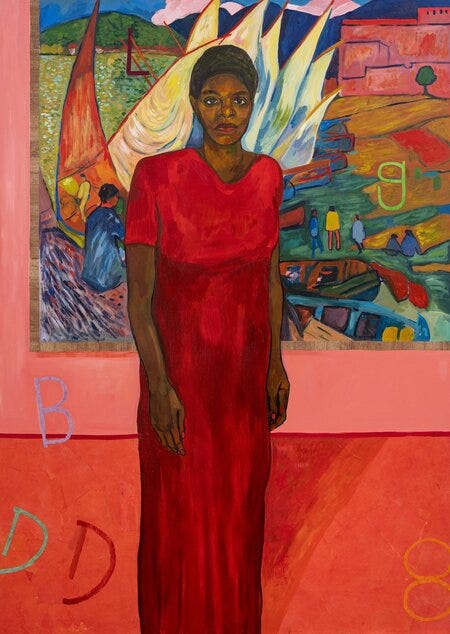
Best recognized for his powerful portraiture and figuration work, Khalif Tahir Thompson incorporates painting, drawing, collage, printmaking, and paper-making into his practice while exploring notions of self through the scopes of race, sexuality, and spirituality.
Events of the month
Corals
Beyond the surface. Between visible and invisible
Opening on Wednesday, June 10, at Corals Gallery, the group exhibition “Beyond the surface. Between visible and invisible” brings together the work of Michele Maria Canditone, Gaia Coals, Julia Ciulek, and Giulia Papetti.
The exhibition revolves around the element of water, which here does not manifest through its chromatic evidence but reveals itself as a subtle world, perceptible through its intrinsic properties: plasticity, adaptability, and purifying power. An invisible veil of water connects the voices of the four artists, guiding visitors through an exploration of resilience and memory.
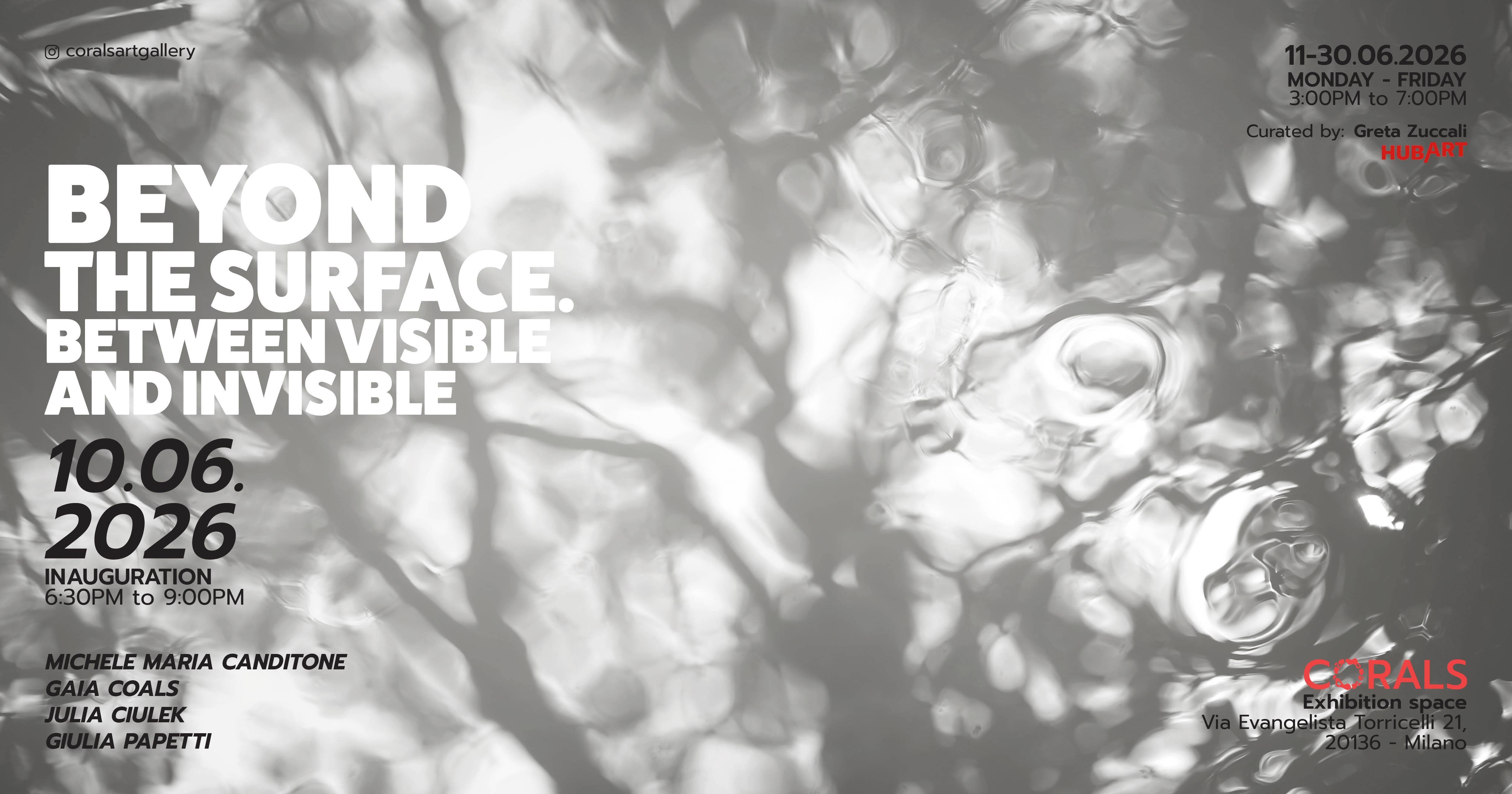
Opening night: Wednesday, 10 June h. 18:30 - 21:00
Via Evangelista Torricelli 21, Milan
To learn more about my work, discuss collaborations, share event news, or suggest exhibitions for review, get in touch at hello@hub-art.org.